Project Overview
Same But Different is an architectural research project that investigates variation within constraint. The project explores how a single system, when subjected to controlled subdivision and transformation rules, can generate a wide range of spatial, visual, and architectural outcomes. Rather than pursuing novelty through form invention, the project examines difference as a product of repetition, adjustment, and systemic modification. The work positions architecture as a process-driven discipline where outcomes are shaped by logic rather than intuition alone. Each study within the project originates from the same base configuration, yet through changes in scale, subdivision density, orientation, and layering, each iteration produces a distinct architectural condition. The project highlights how sameness and difference are not opposites, but interdependent qualities within systematic design. By focusing on subdivision as the primary generative tool, the project establishes a framework where architectural identity emerges gradually through repetition and deviation. This approach allows the work to operate simultaneously as research, representation, and architectural speculation.
Concept & Intent
The core intent of Same But Different is to question authorship and originality in architectural design. Instead of designing multiple unrelated forms, the project proposes a single governing system that generates difference through controlled transformation. This method challenges the idea of the architect as a form-maker and repositions the architect as a system designer. Subdivision is used as a critical operation that mediates between uniformity and variation. By subdividing a consistent base geometry under different parameters, the project explores how minor adjustments can lead to significant spatial and visual diversity. The intent is not to disguise repetition, but to expose it and test its limits. Through this approach, the project demonstrates that architectural richness can emerge from restraint, and that variation does not require complexity at the outset, but rather precision and discipline in the application of rules.
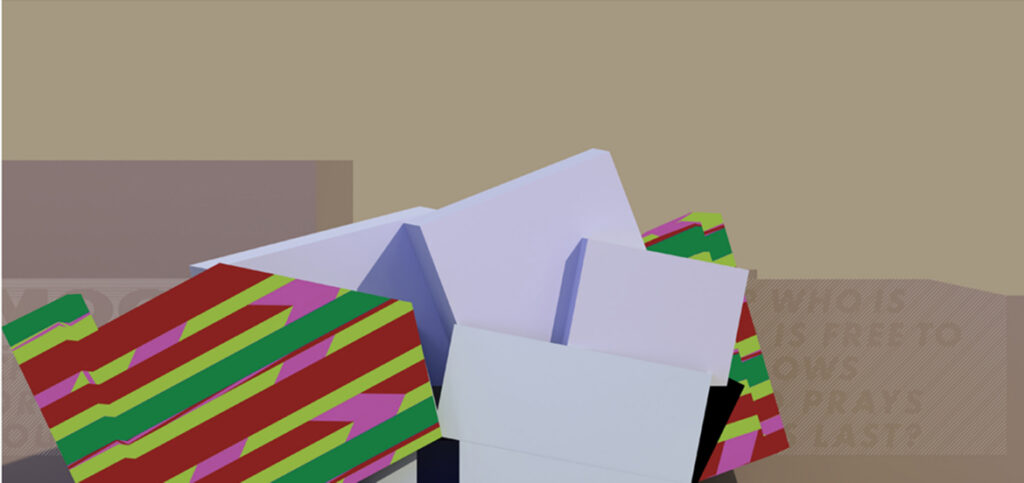
ADDING ARTPIECE IN THE BUILDING
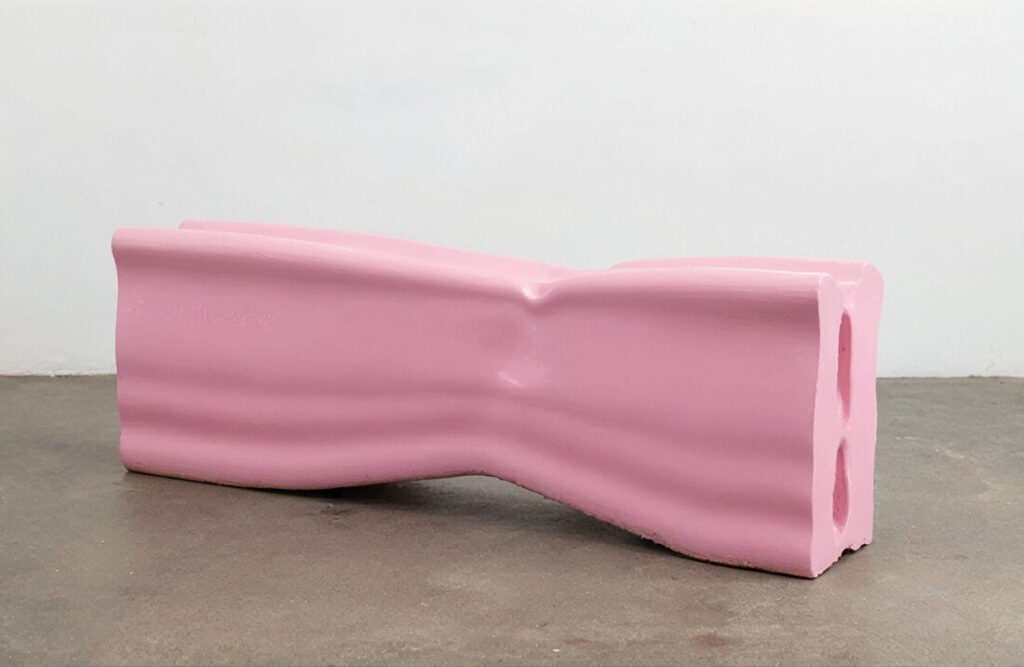
SHAHRYAR NASHAT
In a view of space modification the artist is very unusual as he mixes the color and light, modifying and playing in the space with colors and rhyme. He engages in the the study of the body types of and tries to mix our visual culture and a issues that work solemnly through the process of interplay of colors, forms flexibility and lights.
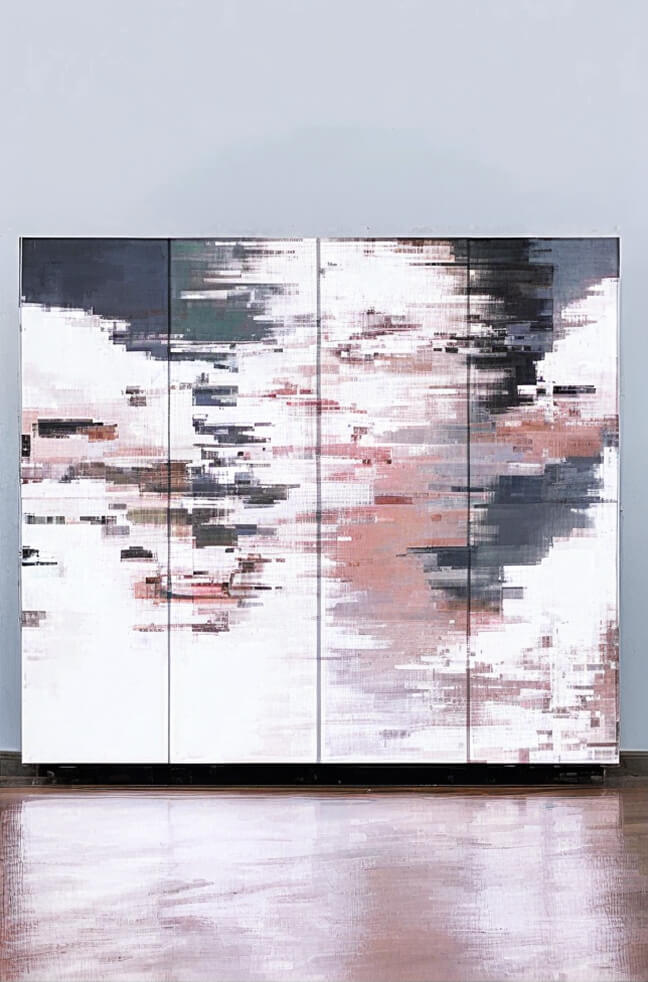
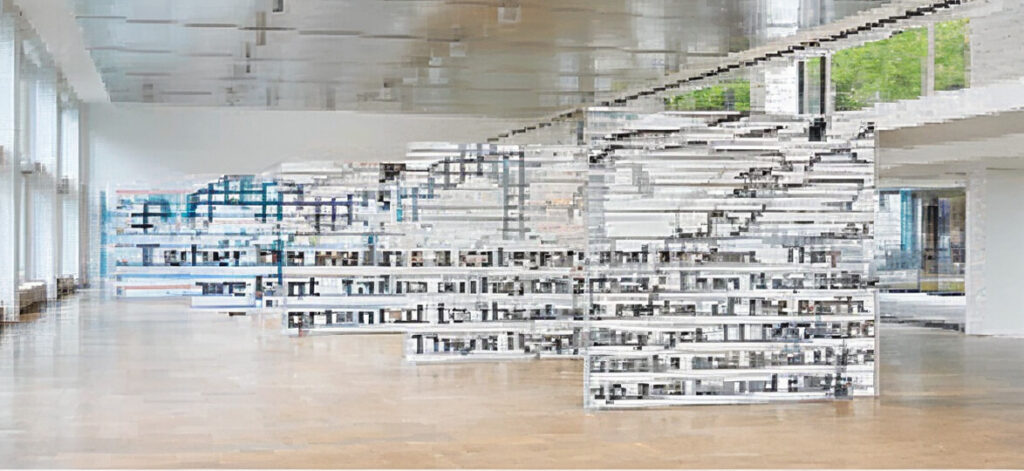
LAURA OWENS
In the several artists works I would like to underline the idea of “retrofitting” the classical painting techniques and projecting them into digital realm. The series of paintings which are aimed to view from afar in order to read them properly, I would like to note her ability to orient in the space and engage the spectator into both seeing the art and being able to explore it in detail while walking around the exposition.

Theoretical & Architectural References
The project draws from theoretical discussions around modularity, seriality, and repetition in architecture and art. References include modernist systems-based design, structural rationalism, and contemporary computational approaches where rules replace intuition as the primary driver of form. Architectural precedents that utilize repetition—such as housing blocks, structural grids, and prefabricated systems—influence the project’s logic. However, rather than focusing on efficiency or standardization, Same But Different explores the expressive and spatial potential of repeated systems. The project also references graphic and visual studies where pattern and variation are central themes, reinforcing the connection between architectural thinking and representational practice.

Subdivision Logic & System Rules
The project is governed by a clearly defined subdivision framework. An initial geometric field acts as the constant base for all studies. This field is subdivided using a consistent rule set that controls parameters such as proportion, density, alignment, and scale. Variation is introduced incrementally. In some iterations, subdivision density increases to create compressed spatial conditions. In others, subdivision is relaxed, producing openness and clarity. Despite these differences, the underlying system remains legible, ensuring that each study can be traced back to the same origin. This controlled approach allows difference to emerge without breaking systemic coherence. The project demonstrates how architecture can maintain identity while accommodating diversity through rule-based manipulation.
Process & Iterative Development
The development of the project follows an iterative workflow, where each study builds upon the previous one. Early iterations focus on establishing clarity within the subdivision system, testing proportions and grid relationships. As the project evolves, additional layers of complexity are introduced through depth, stacking, and rotation. Each iteration functions as both a conclusion and a starting point. Observations made in one study inform adjustments in the next, creating a continuous feedback loop between analysis and production. This process reinforces the idea that architectural design is not linear, but cyclical and accumulative. The iterative methodology ensures consistency across the body of work while allowing for exploration and experimentation within defined boundaries.
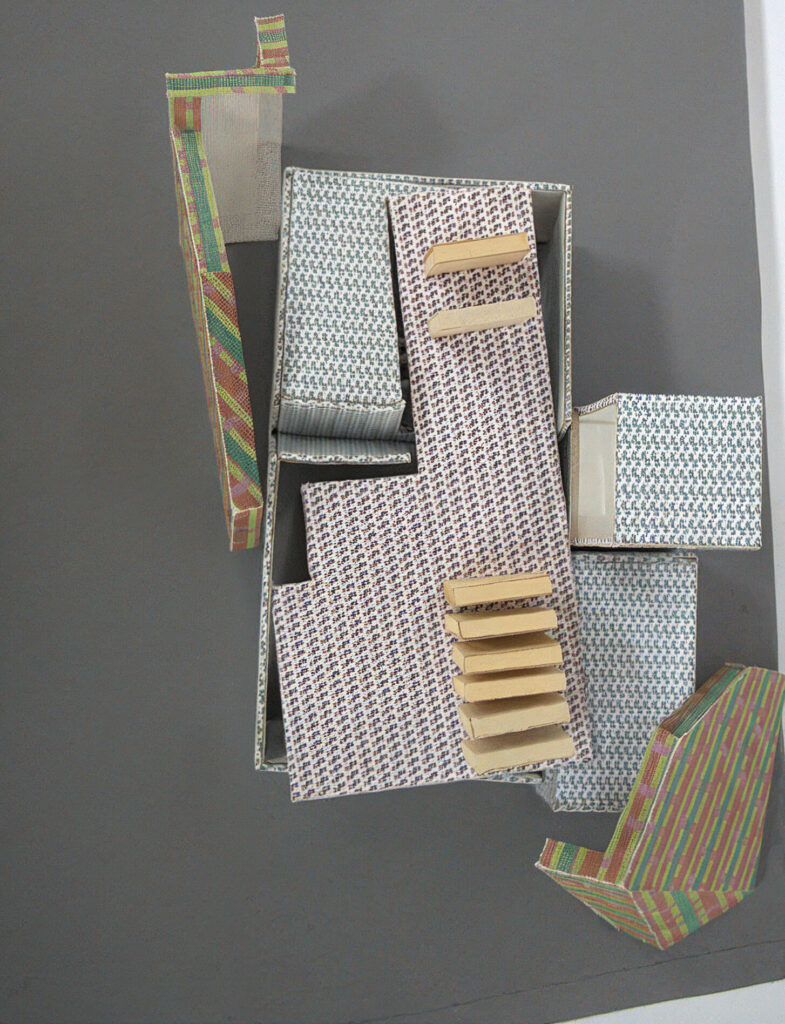
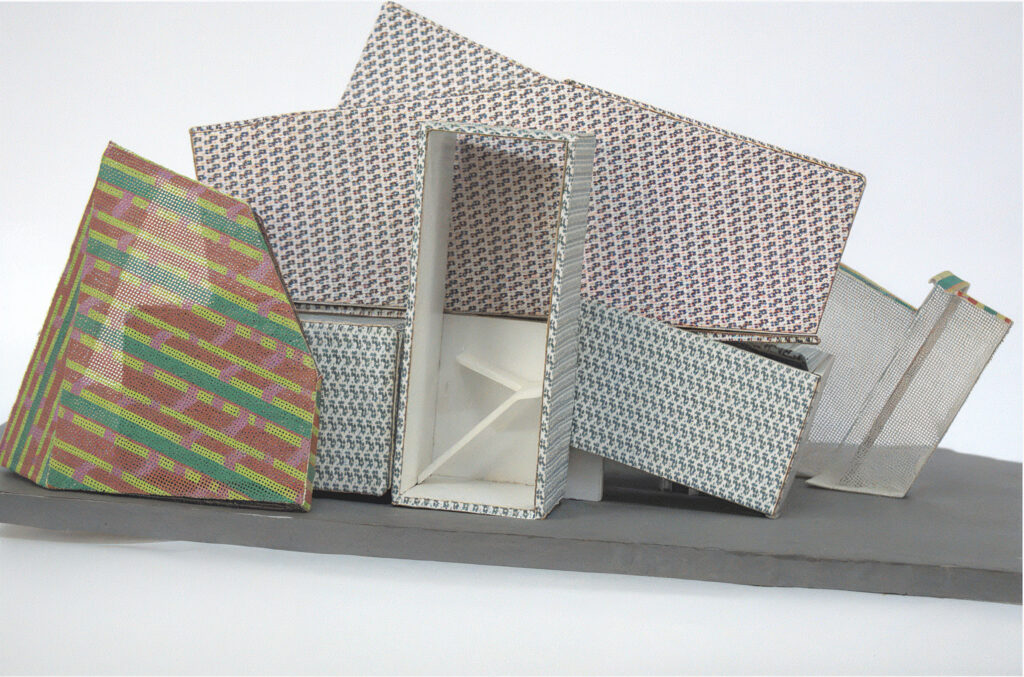
Paper Model of the building RightView
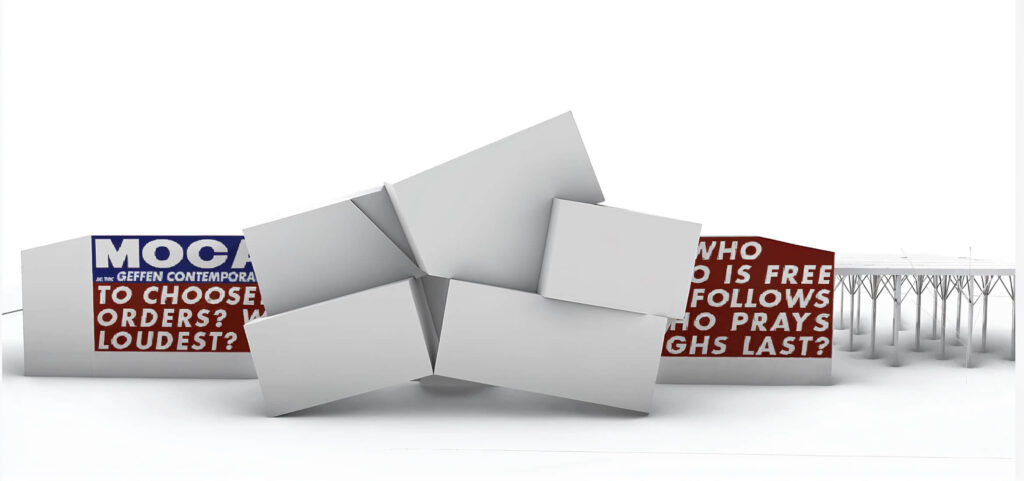
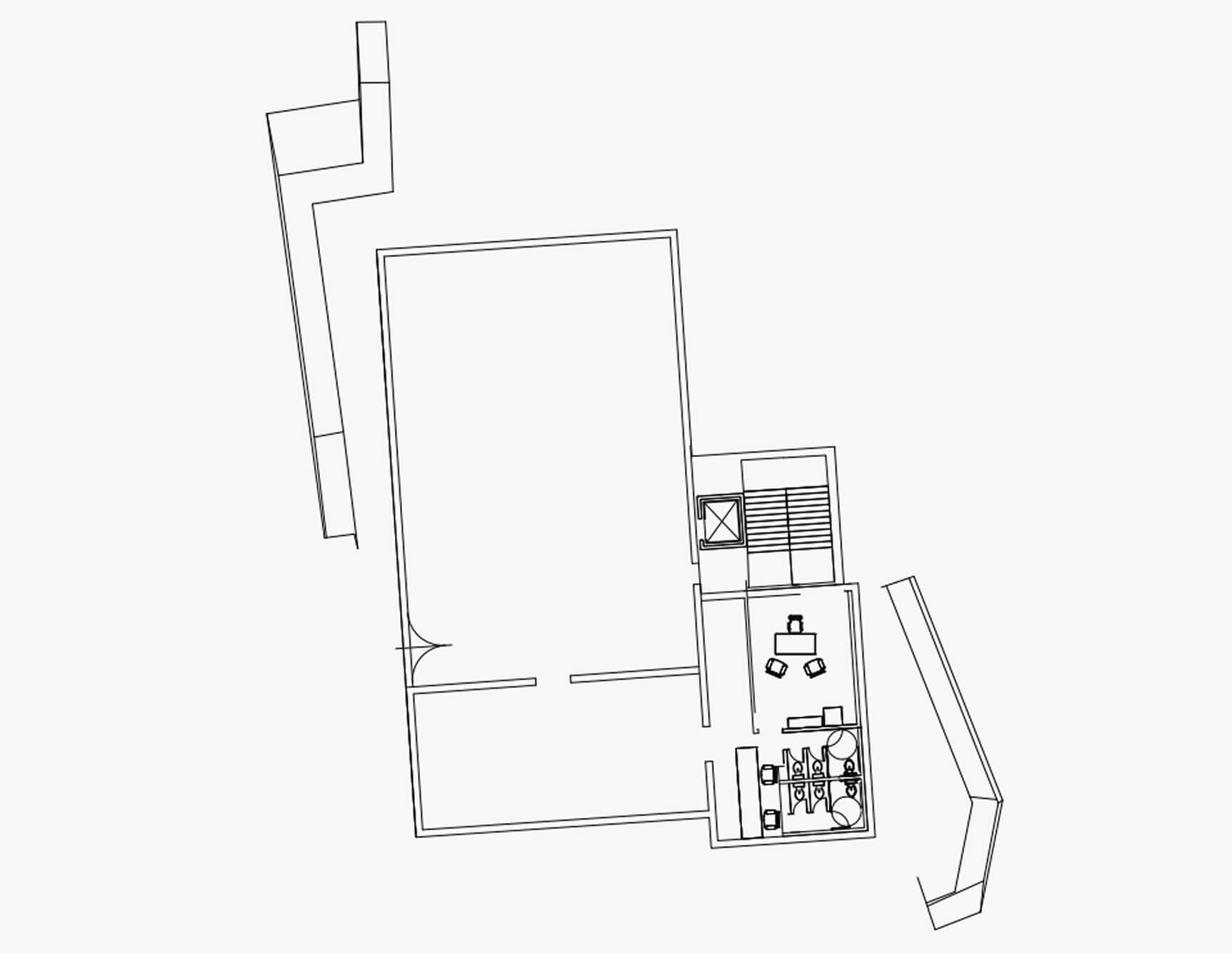
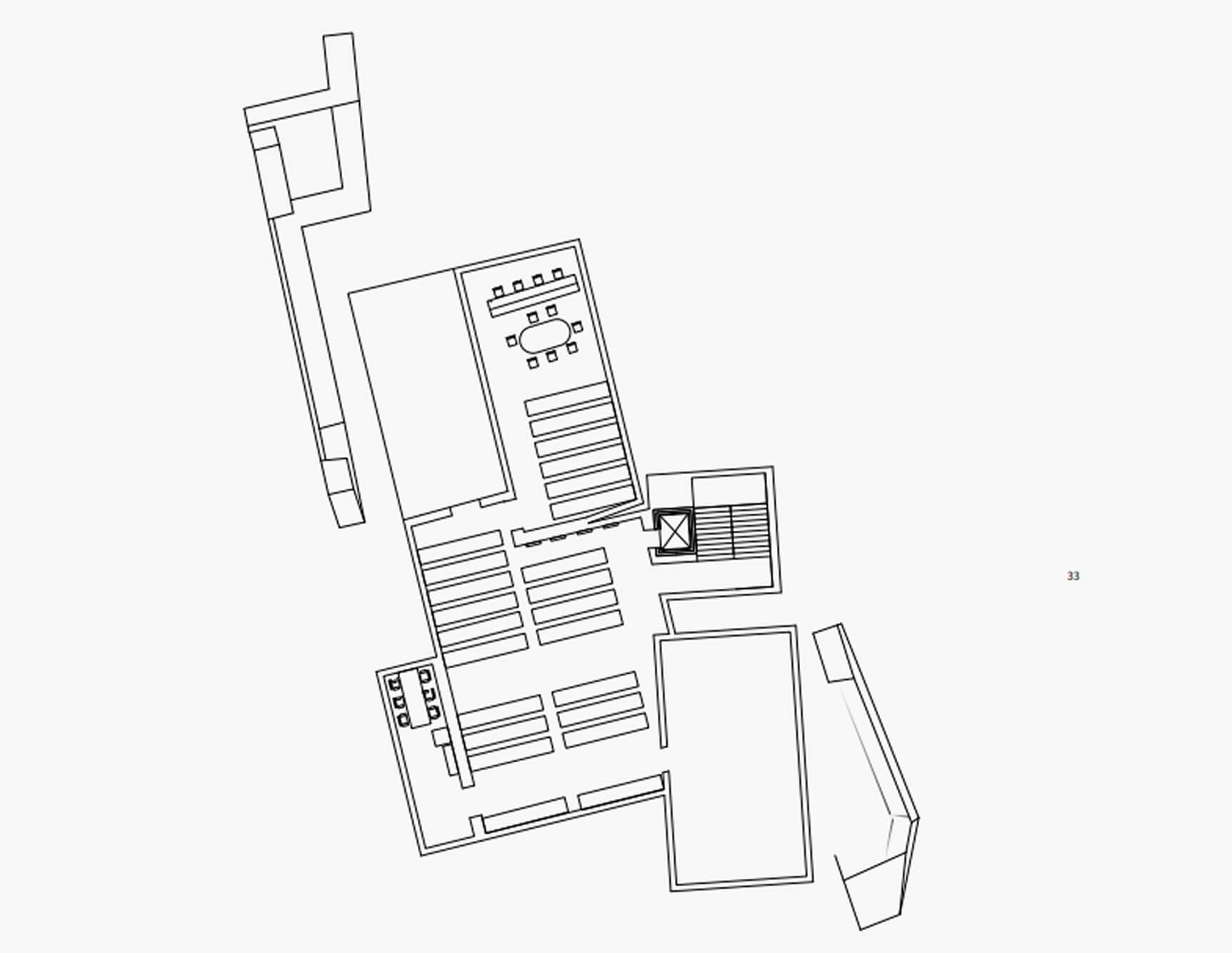
The Moca extention building contains the open space artist gallery on the
Ground Floor and Art Storage area located on the
Second Floor connected by staircases and elevators.
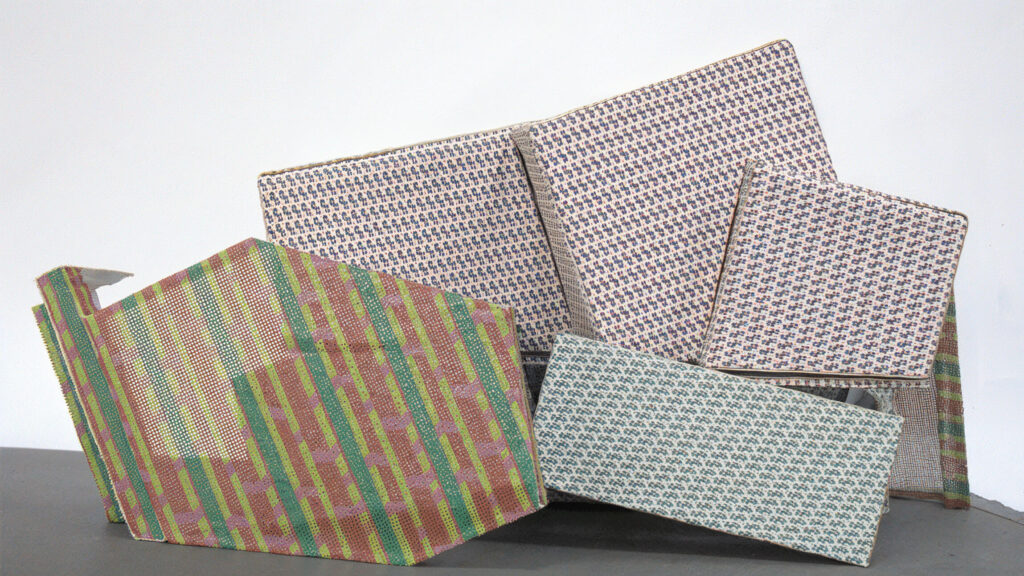
Paper Model of the building Left View
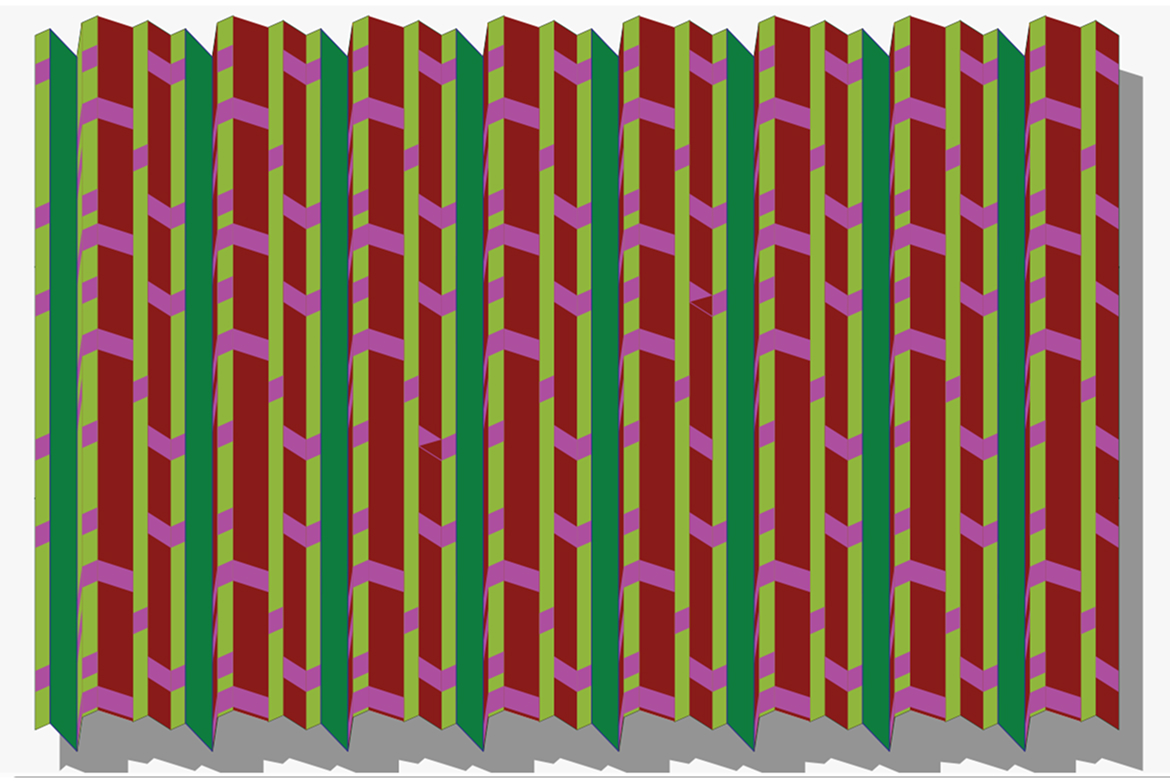
Varieties of textures are implemented on the model to represent swatched paper texture of blue and red colors.
Initially the model was laser cut from foam core material and glued with precisely cricket cut paper chunks on the top, The perforated paper was printed with the pleated grid pattern, folded and glued accordingly
Spatial Interpretation & Architectural Readings
Although the project remains abstract, it is inherently spatial in nature. The subdivision systems suggest architectural conditions such as structural frameworks, circulation networks, and zones of occupation. Certain studies imply sectional depth and layered spatial relationships, while others emphasize planar organization. These readings are intentionally left unresolved. The project does not assign fixed programs or functions, allowing each study to remain open to interpretation. This ambiguity positions the work as a speculative architectural framework rather than a finalized proposal. The abstract nature of the studies allows them to operate across multiple scales, from furniture and installations to buildings and urban systems.
Graphic Language & Visual Consistency
A disciplined graphic language is maintained throughout the project to reinforce coherence. Line weights, tonal contrasts, and compositional balance are carefully controlled, ensuring that visual differences arise from the system rather than stylistic variation. This consistency allows viewers to clearly identify similarities and differences between iterations. The restrained graphic approach emphasizes structure, hierarchy, and spatial logic, reinforcing the analytical nature of the work The drawings function both as research artifacts and as independent visual compositions, capable of communicating complex ideas with clarity and precision.
Representation & Tools Used
The project employs a combination of digital and analog tools. Rhino is used for geometric construction and subdivision control, allowing precise manipulation of parameters. Illustrator is used to refine drawings, control line hierarchy, and establish visual clarity. Physical models and hand sketches supplement digital work, providing tactile feedback and alternative perspectives on spatial depth and proportion. This hybrid approach supports both systematic rigor and intuitive understanding. Representation is treated not as a final step, but as an integral part of the design process.
Architectural Resolution
Rather than resolving into a single architectural object, Same But Different concludes as a structured series of studies that collectively form a research archive. The project’s resolution lies in its demonstration of how a single system can generate multiplicity without losing coherence. This approach challenges conventional expectations of architectural outcomes and emphasizes the value of research-based design. The project positions architecture as a discipline capable of producing knowledge through systems, processes, and representation.
Critical Reflection
Same But Different reflects on the role of systems in architectural practice. By prioritizing rule-based design over intuition-driven form-making, the project highlights the potential of disciplined processes to generate spatial richness and diversity.The work suggests that difference does not need to be forced or exaggerated. Instead, it can emerge naturally through careful calibration of systems and parameters. The project reinforces the idea that architectural intelligence often resides in structure rather than appearance.
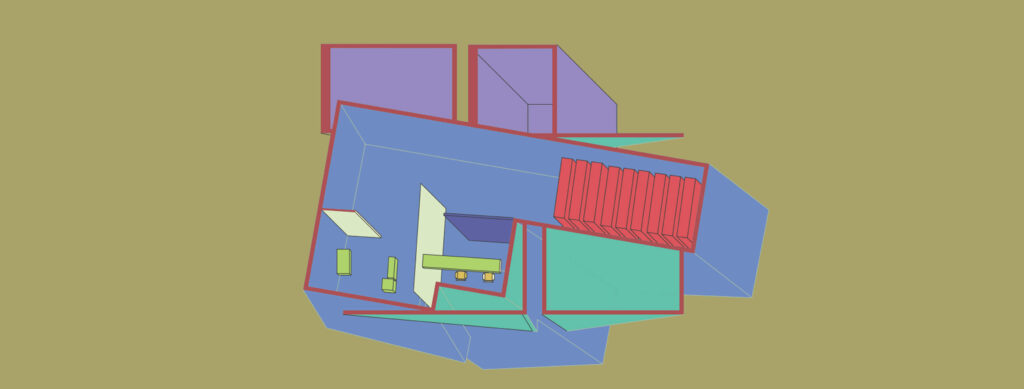
Paper Model of the building Plan View
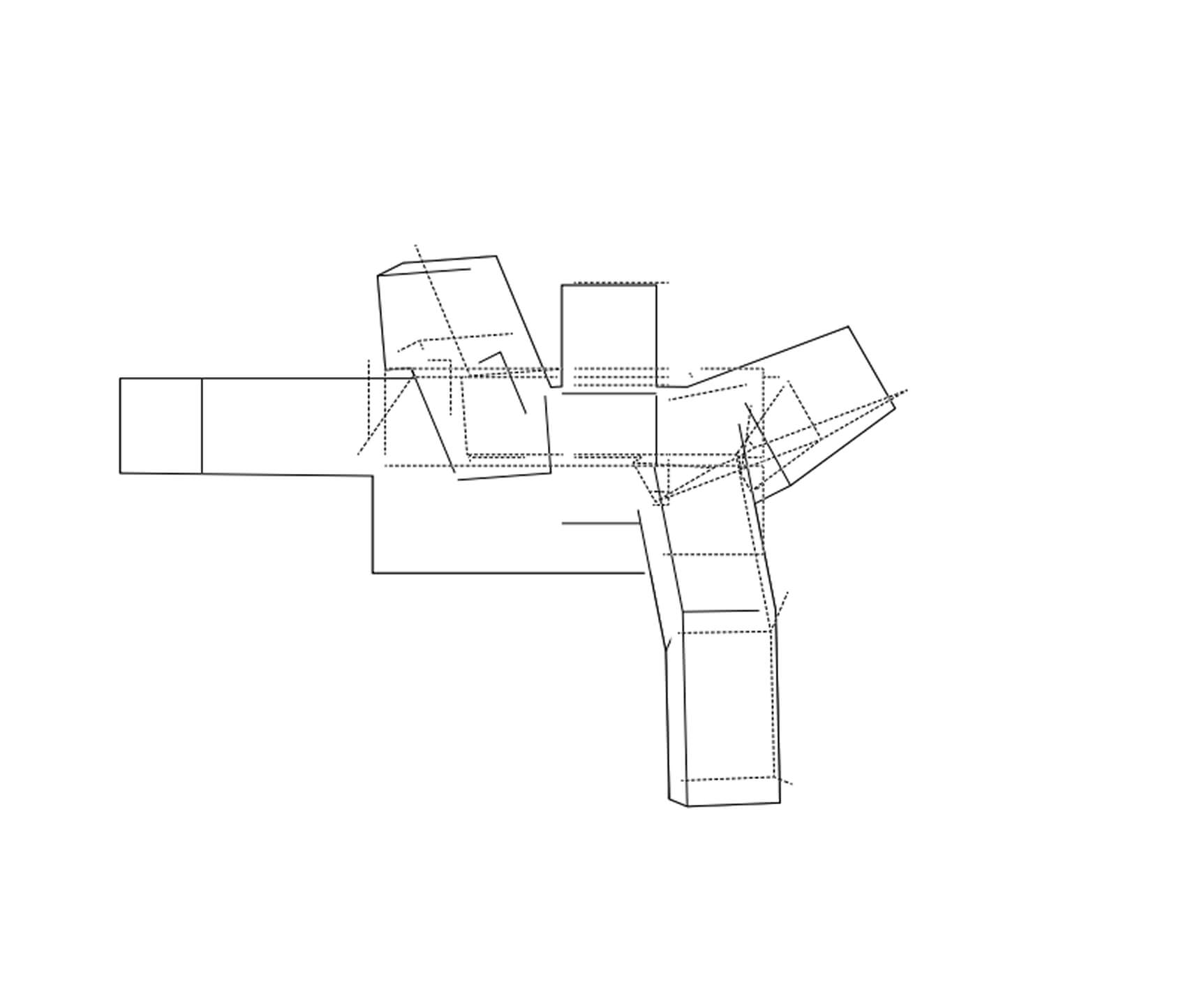
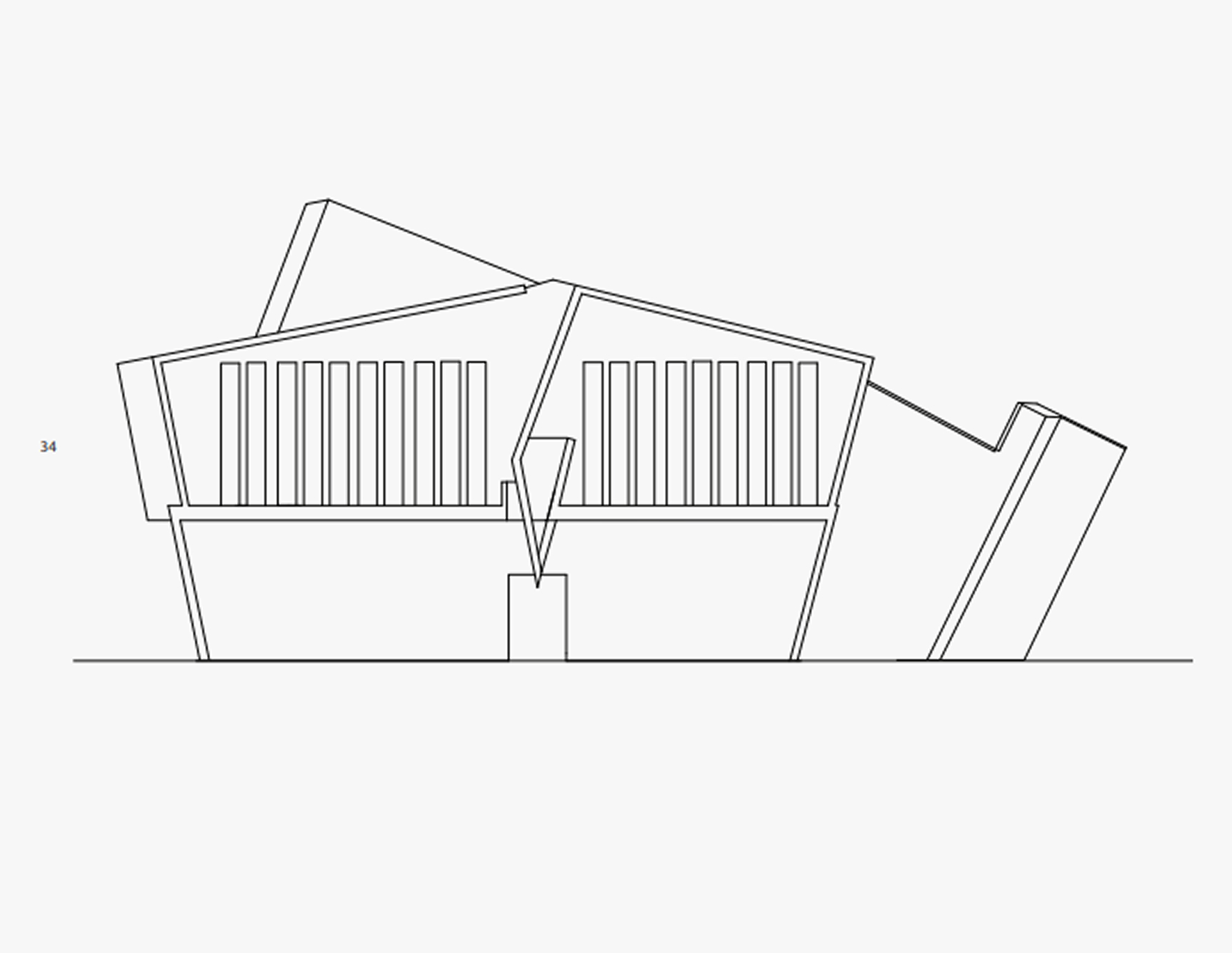
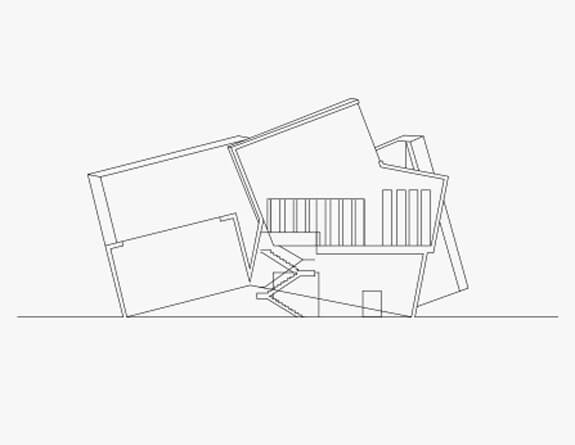
Plans and sections of the Moca Building extention reveal the programmatic organization of the building.
The first floor (invisible) shows open plan gallery, reception spaces and offices and a staircase interconnecting the floors. The second f loor ( shown on picture) shows an art storage area with manila paper crafted boxes as an art storage drawers.