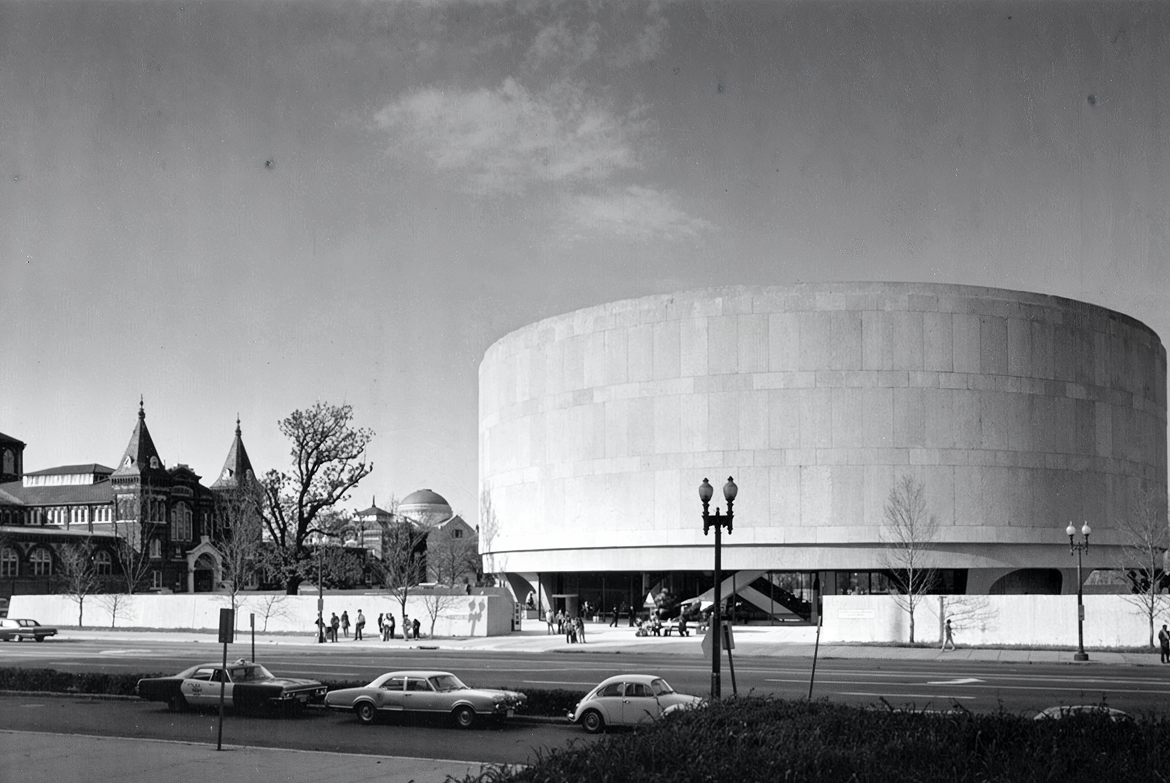
Project Overview
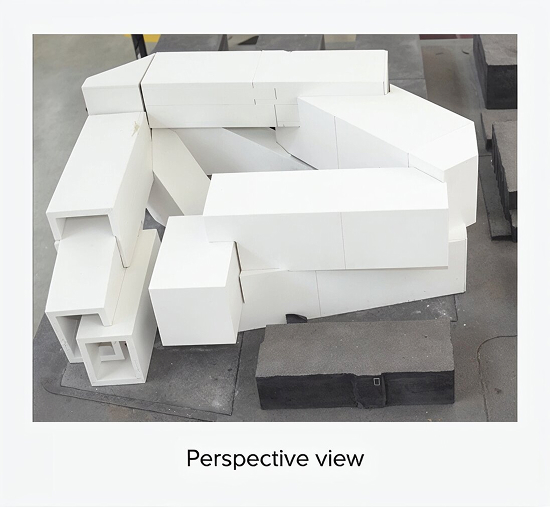
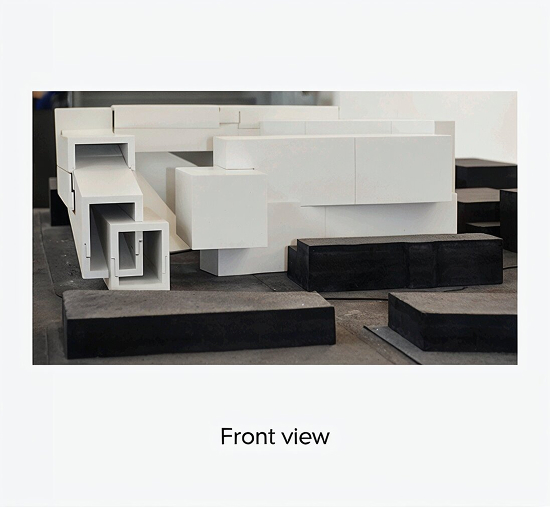
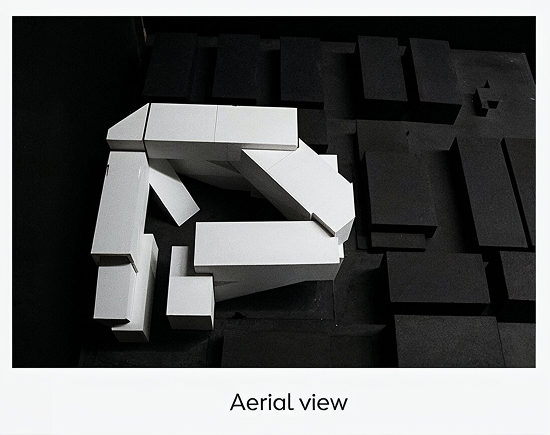
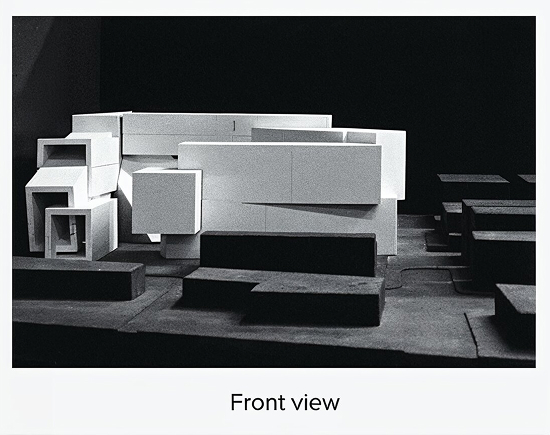
The Courtyard Building project explores architecture as a system of spatial relationships organized around an internal void. Rather than treating the courtyard as a residual or decorative element, the project positions it as the primary organizational device that governs circulation, light, program distribution, and social interaction. The building is conceived as an inward-looking structure that mediates between collective and individual spaces through calibrated spatial transitions. The project investigates how enclosed open space can generate environmental comfort, spatial hierarchy, and architectural identity. By framing the courtyard as both a climatic moderator and a social condenser, the building establishes a strong internal focus while maintaining controlled connections to its external context. The architecture prioritizes sequence, enclosure, and proportion over expressive form-making. Through careful manipulation of massing, section, and circulation, the Courtyard Building creates a layered spatial experience where movement unfolds gradually around the central void. The courtyard acts as a reference point throughout the building, allowing users to remain oriented while experiencing a variety of spatial conditions.
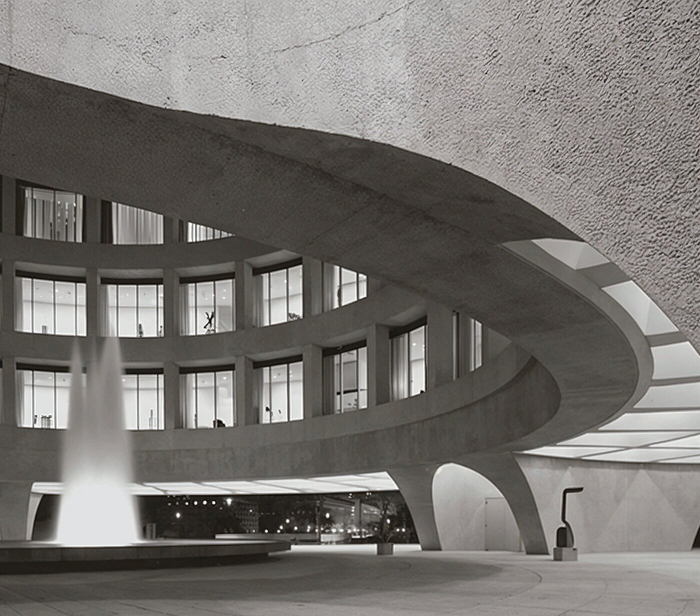
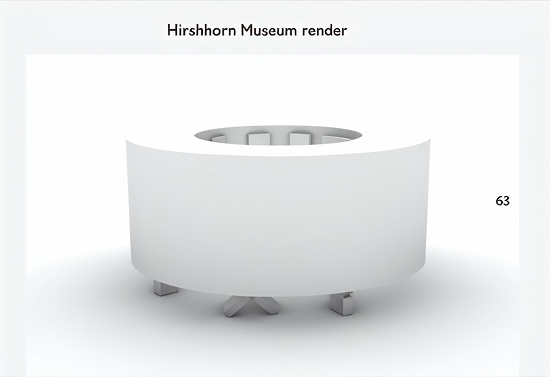
Hirshhorn Museum, courtyard view. Elevated over the ground on columns the courtyard provides an absolute throughput inside.
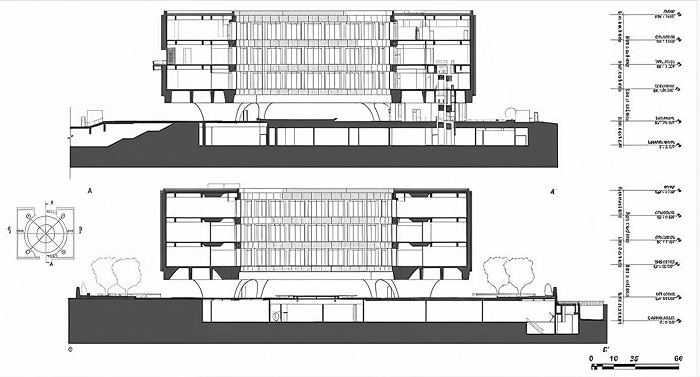
Hirshhorn Museum, section
Hishhorn Museum
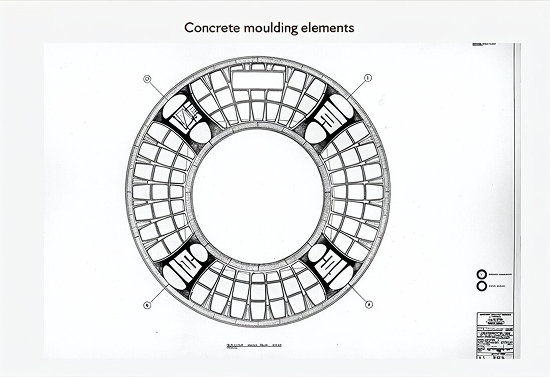
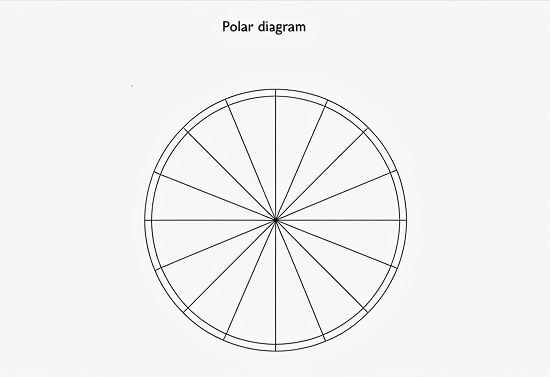
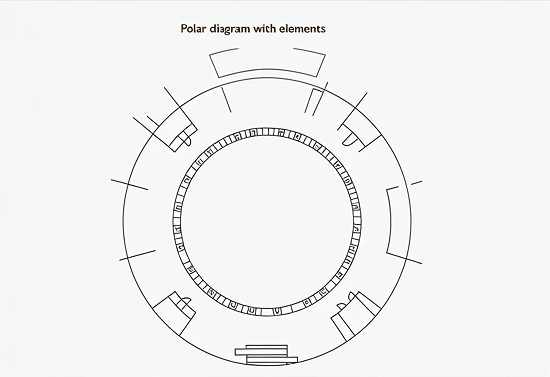
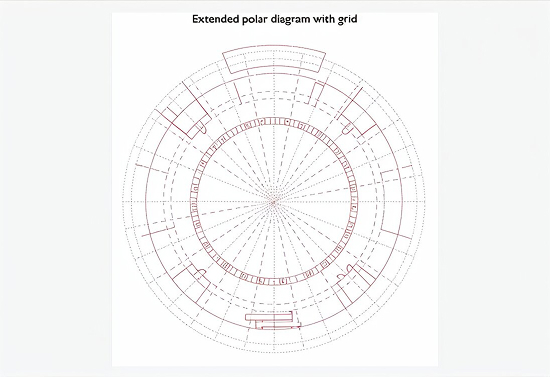
Hirshhorn Museum analysis starts with drawing the polar diagram as it is an absolute circular building with an absolute symmetry. Essentially the circulation is mostly locked into a circle with offsets up and down to elevators.
SITE AND CONTEXT: CHUTES AND LADDERS
Based on the principles of the game originated sometime in the 13th century studio was making a field trip to
the UCLA parking structures. As the game suggests: players compete to get to the top by throwing the dice. But
shortcuts get in the way, with chutes sliding the players down and ladders rising them toward their destination.
As an architectural plan, the board game is uniquely beautiful. It suggests a plan that can simultaneously be read
as a section, with circulatory figures of the ramp and the stair producing a series of circuits through the otherwise flat grid. The floor plan of a parking structure was associated with the gridded field of the boardgame.
Considering that the structural columns produce the gridded parcels, that car ramps can be read as circulatory snakes, and pedestrian stairs, bridges, and elevators can offer vertical shortcuts between floors. The goal was to map a circuit through a parking structure that confuses that normal pathway of a car into a sectional loop initially drawing the loop path with a giant chalk.
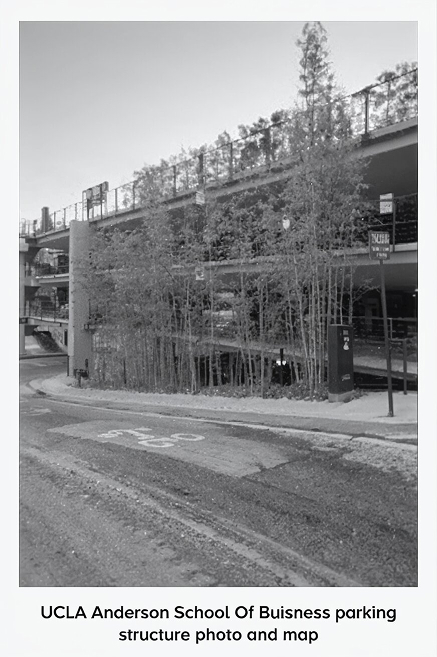
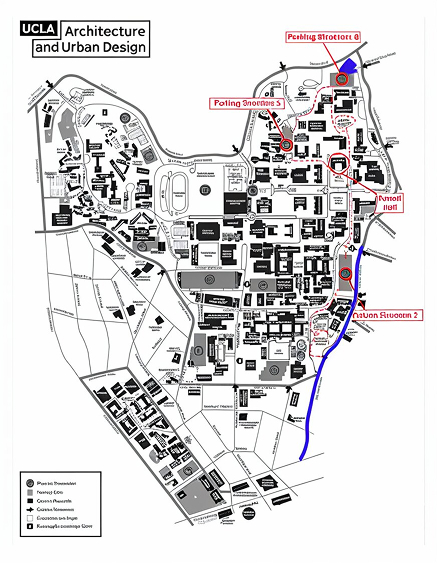
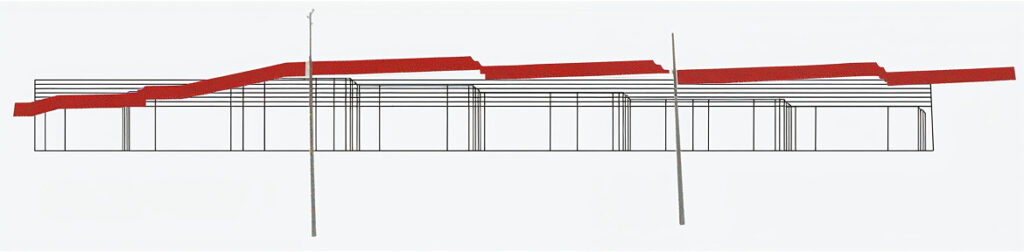
Using one roll of tape, a knife, and a ruler, mark out the path with tape segments. Indicating individual pieces of tape to mark each segment of the unrolled circulation line with ramps and stairs.
TYPOLOGY AND TOPOLOGY
Back in studio, digitally modeling the segments of the path, tracing the circuit as a threedimensional loop. This wireframe diagram will become the basis for a physical model, a small assembly of pieces that intersect and balance in a looping stack.
Each segment is reserved for one part of the path – the ramp segment, the stair segment, the landing segment. These segments were carefully measured in length, width, and in slope.
Concept & Intent
The core intent of the project is to reinterpret the traditional courtyard typology through contemporary architectural logic. Historically, courtyards have served as climatic devices, social spaces, and organizational centers. This project builds upon those principles while abstracting them into a rule-based architectural system. The courtyard is treated as a spatial anchor rather than a visual feature. All primary circulation paths engage with the courtyard either directly or indirectly, creating a continuous relationship between movement and void. The design emphasizes gradual transitions—from public to semi-public to private—through changes in scale, enclosure, and visual permeability. The project resists the idea of a single dominant façade. Instead, architectural emphasis is placed on internal relationships, where the courtyard becomes the most articulated and spatially rich component of the building. This inward focus allows the architecture to prioritize experience over external representation.
Theoretical & Typological References
The project draws from courtyard-based typologies found in residential, institutional, and civic architecture across different cultures. References include monastic cloisters, academic quadrangles, and traditional housing complexes where open space functions as an organizing device rather than leftover space. Modern architectural precedents that explore void-solid relationships and sectional complexity also inform the project. Theoretical influences include spatial hierarchy, threshold conditions, and the role of enclosure in shaping human experience. Rather than replicating historical forms, the project abstracts typological principles into spatial rules. These rules govern proportion, adjacency, and circulation, allowing the courtyard to remain flexible while maintaining architectural coherence.
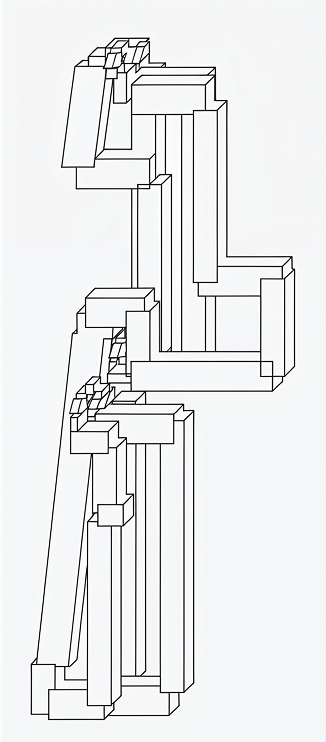
Parking structure circulation loop line broken into pieces with ramps and stairs render.
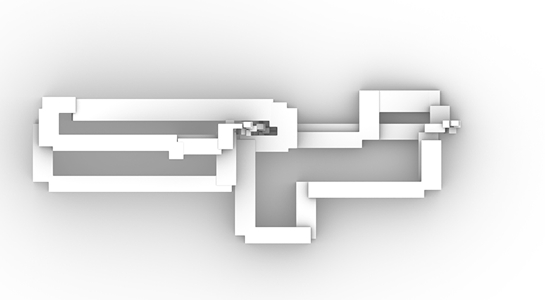
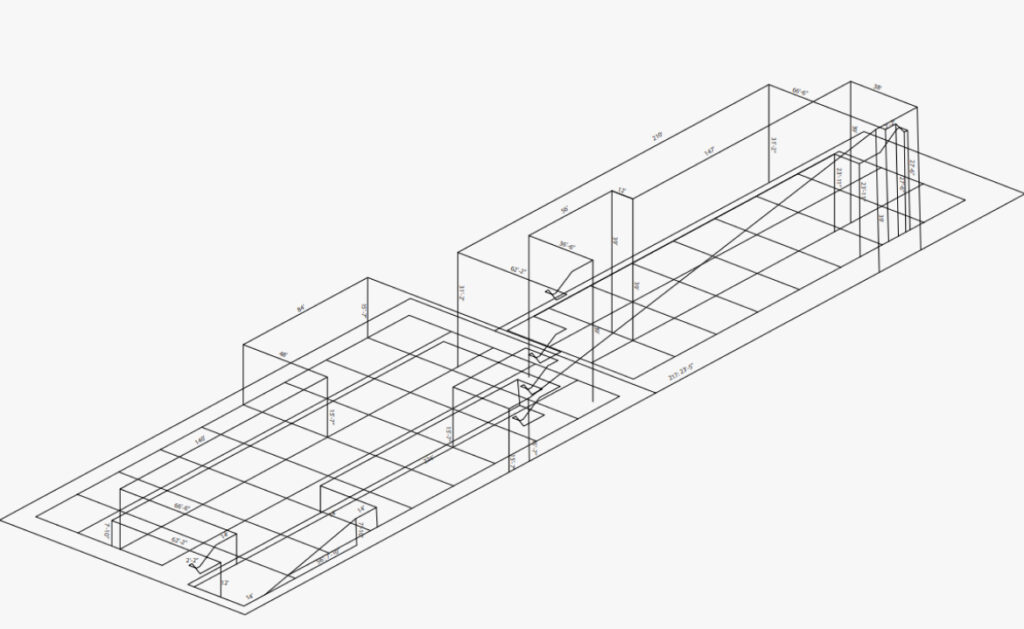
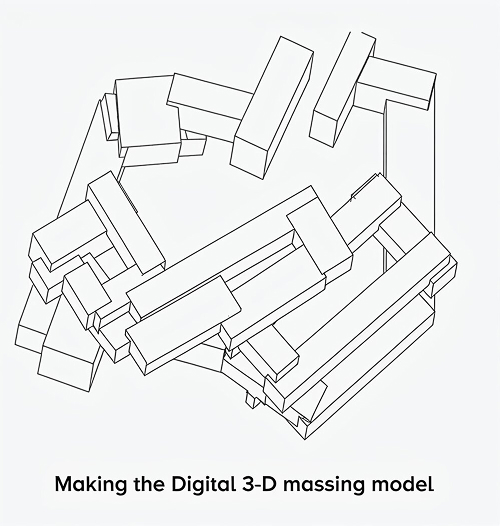
3-D modeling the tape segments as a 3-dimensional line (before it was unrolled or sheared for presentation).
Keeping the proportions of the tape identical; a 1-inchwide tape may translate to an estimated 30-foot tall
rectangle. Projecting this rectangle to make a 3d box where 1-inch tape translates to a 30-foot-tall rectangle, it will be projected 60 feet in depth. Repeating the projection for every tape segment producing a series of flat overlapping boxes.
Making circulation and blocks oblique drawings
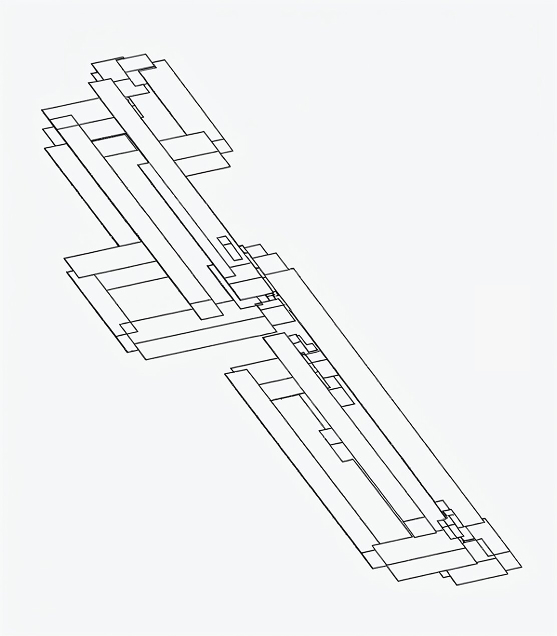
Spatial Organization & System Logic
The building is organized through a clear spatial hierarchy structured around the courtyard. Programmatic elements are arranged in concentric layers, with the most public functions located closest to the courtyard and more private spaces positioned toward the perimeter. Circulation follows a looped system that allows continuous movement around the courtyard. Vertical circulation elements are strategically placed to maintain visual connection with the central void, reinforcing spatial orientation across levels. Structural and spatial grids align to support this organization. Columns, walls, and floor plates are positioned to frame views into the courtyard while maintaining structural clarity. This integration of spatial and structural systems ensures consistency throughout the project.
The Bundt Cake
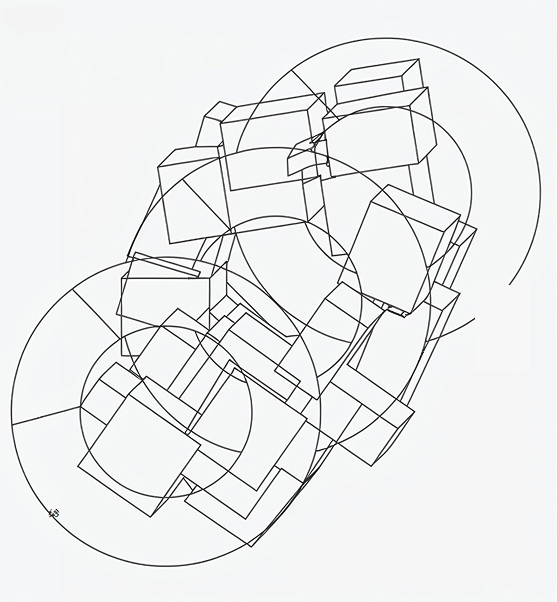
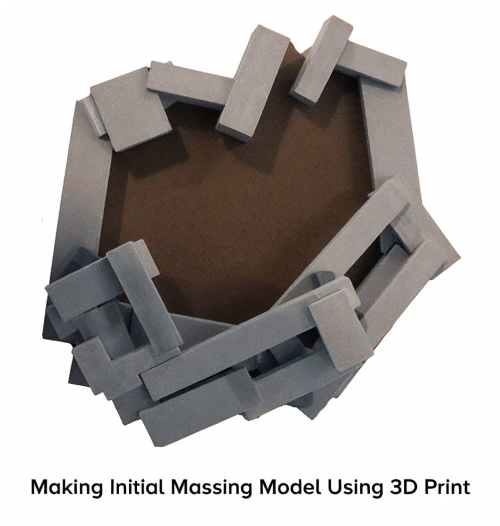
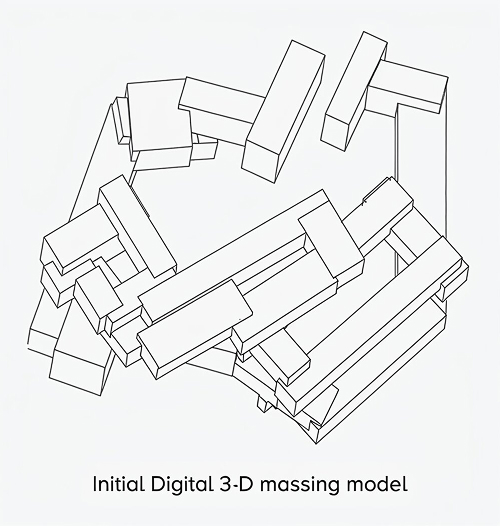
Inscribing the segmented parking circulation blocks into the analyzed building breaking the blocks where needed.
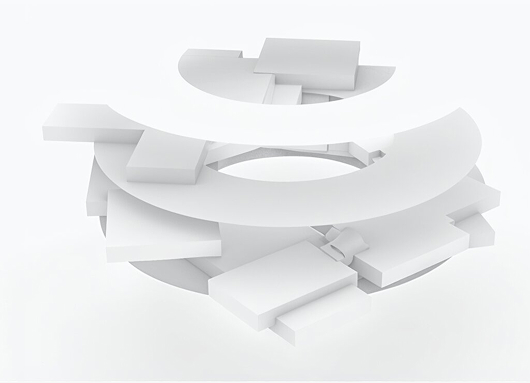
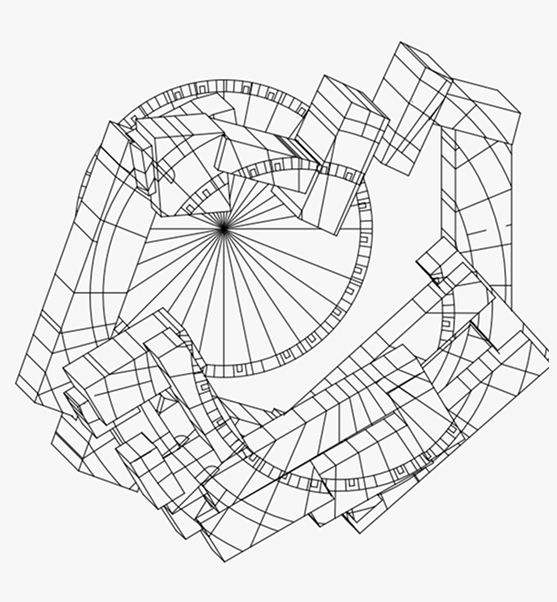
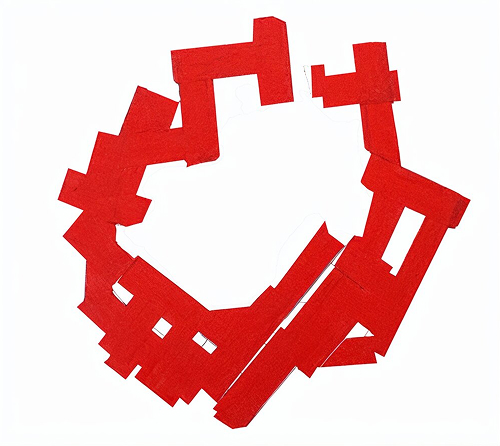
Making a tape drawing of the achieved Bundt Cake form.
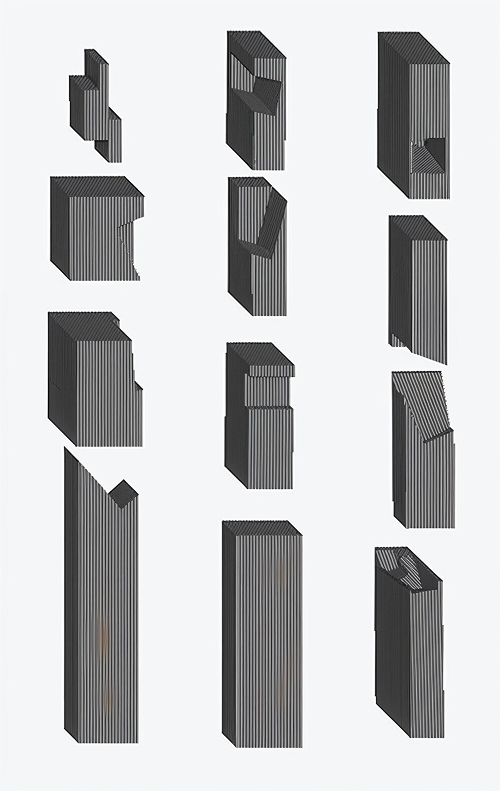
Working out the blocks joinery and design
Formal Development Process
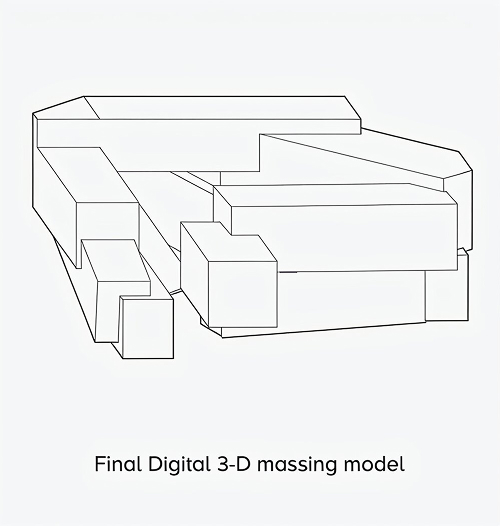
The formal development of the Courtyard Building began with massing studies that tested different void-to-solid ratios. Early models explored how variations in courtyard size and proportion affected light penetration, circulation flow, and spatial hierarchy. Sectional studies played a critical role in refining the project. By manipulating floor heights and openings, the design introduces vertical variation while maintaining visual continuity with the courtyard. These studies informed decisions related to shading, enclosure, and spatial compression. The final form emerges from the accumulation of these studies rather than from a predetermined shape. The architecture reads as a cohesive system where each element is positioned in relation to the central void.
Representation & Tools Used
The project was developed using a combination of digital modeling and analytical drawings. Rhino was used to test massing, proportions, and spatial relationships, allowing precise control over geometry and alignment. Illustrator was used to produce clear diagrams and drawings that emphasize spatial hierarchy and circulation logic. Physical models supported the digital process by allowing tactile exploration of enclosure, depth, and light behavior within the courtyard. These tools were used not only for representation but as active design instruments throughout the project.
Spatial & Experiential Qualities
The experience of the building is defined by movement around and engagement with the courtyard. As users circulate through the building, the courtyard continuously shifts in scale and perspective, offering moments of openness, enclosure, and framed views. Light enters the building primarily through the courtyard, creating a dynamic interplay of shadow and illumination throughout the day. This controlled lighting reinforces the inward focus of the architecture while enhancing spatial depth. The gradual unfolding of space encourages slow movement and awareness of spatial transitions. The courtyard acts as a constant reference point, grounding the user within the architectural sequence.
Architectural Resolution
The final architectural resolution integrates structure, circulation, and spatial organization into a unified system. Structural elements reinforce spatial hierarchy rather than competing with it, while circulation paths remain legible and intuitive. The building envelope is restrained, allowing the interior spatial relationships to define the architectural character. The courtyard façade becomes the most articulated surface, reflecting the project’s inward-oriented logic. This resolution results in an architecture that prioritizes clarity, continuity, and spatial experience over formal expression.
SECTION UNROLL
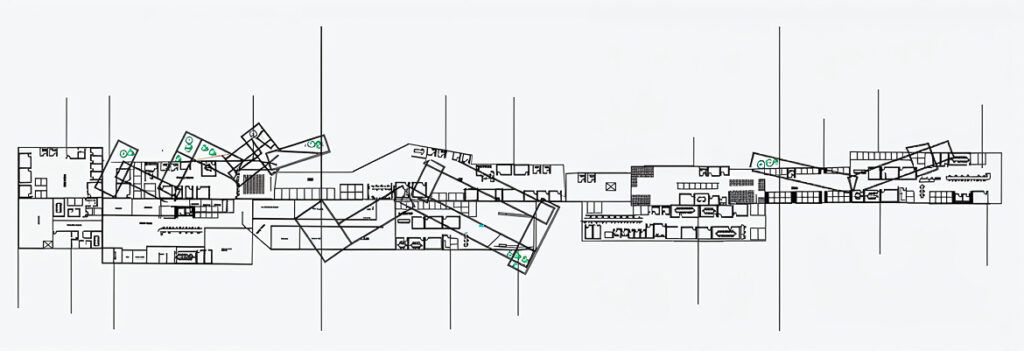
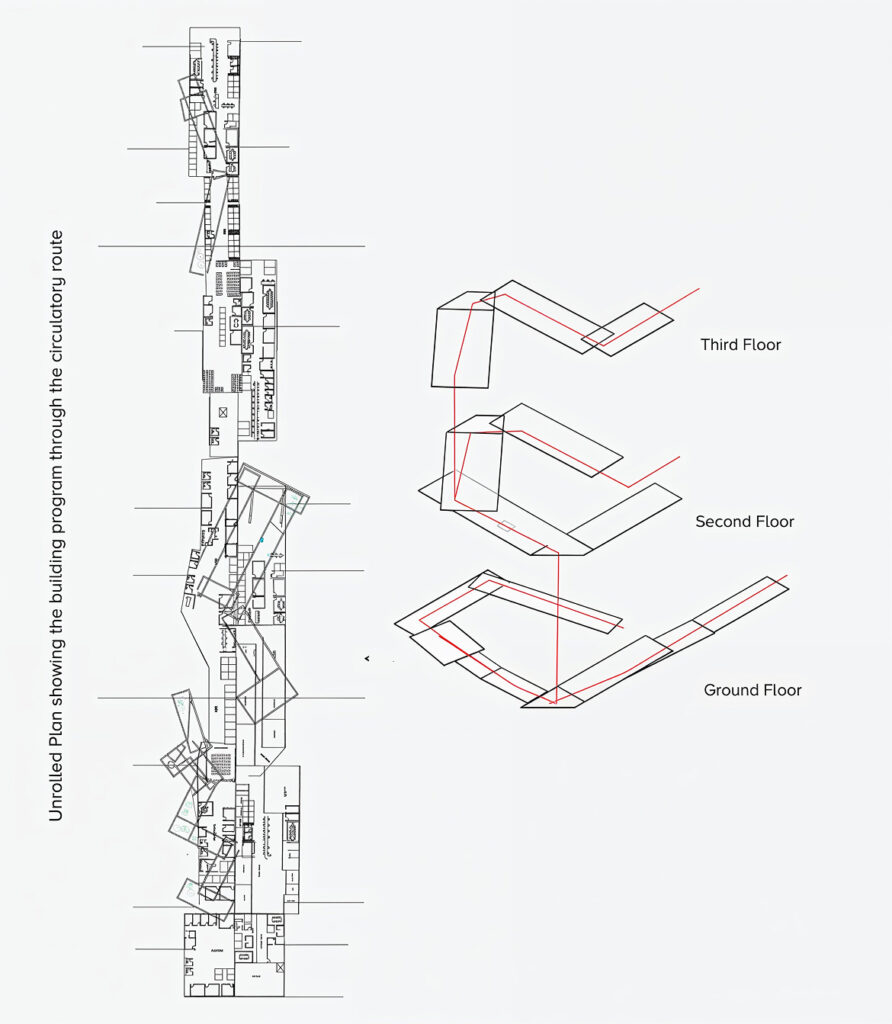
Unrolled Plan showing the building program through the circulatory route
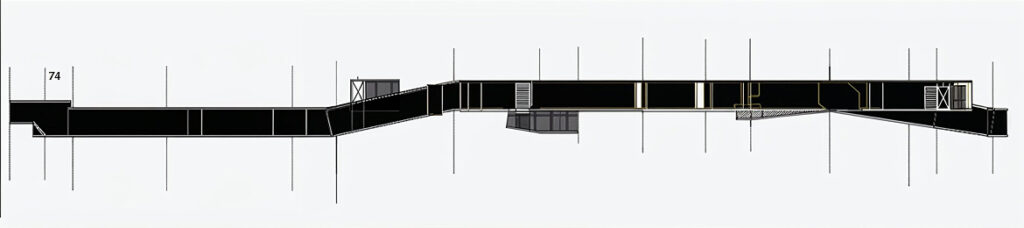
Unrolled Building Section showing the circulatory route throughout the building
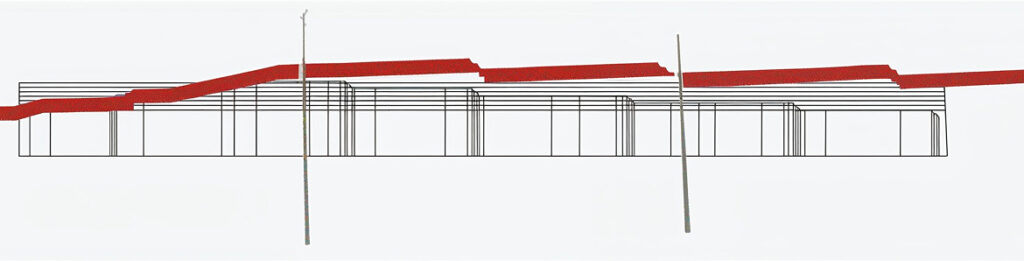
Red tape showing the segmetns of the paths through the building with ramps and hallways
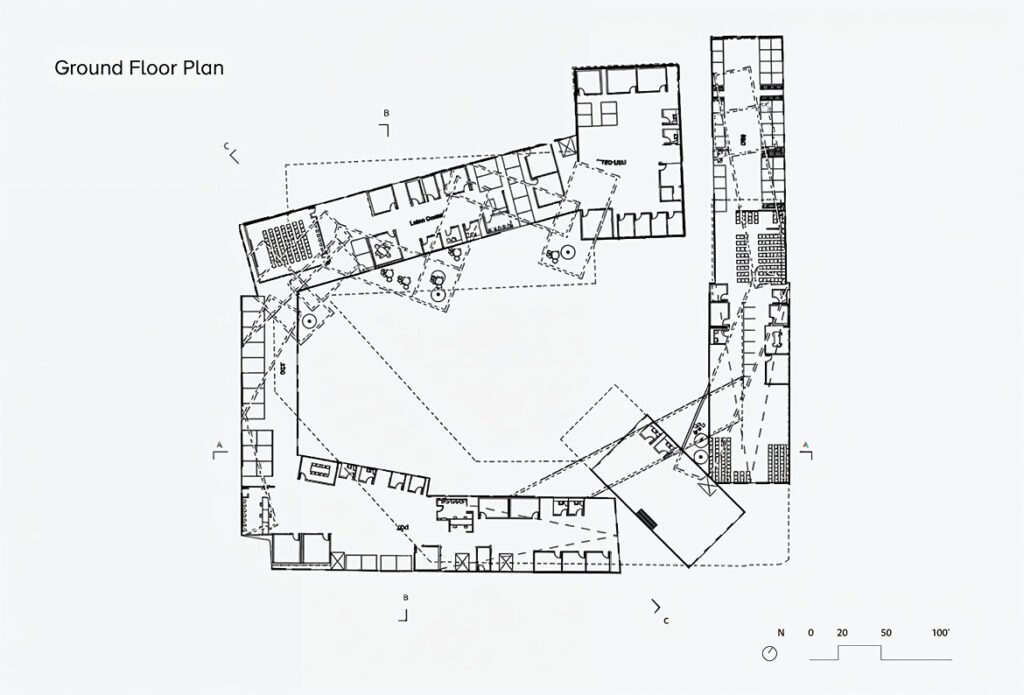
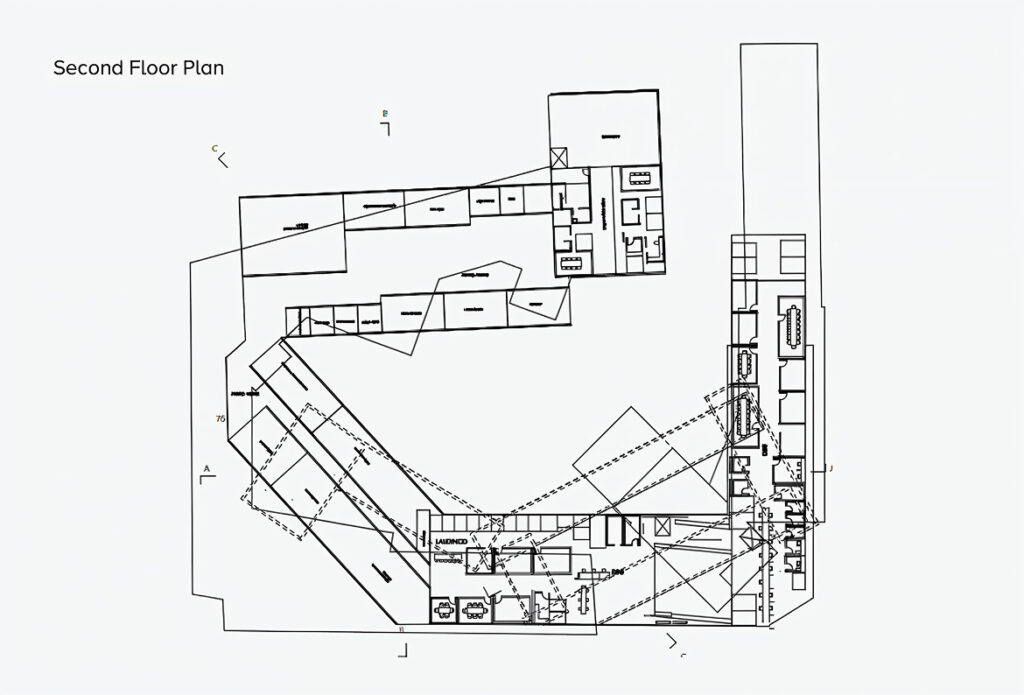
SOME PLANS
Critical Reflection
The Courtyard Building demonstrates how a simple organizational concept can generate architectural richness when explored through systematic design logic. By treating the courtyard as an active spatial device, the project challenges conventional notions of façade-driven architecture. The project reinforces the idea that meaningful architecture emerges from relationships—between solid and void, movement and pause, enclosure and openness—rather than from isolated formal gestures.
CIRCULATION DIAGRAM
PROGRAM DIAGRAM
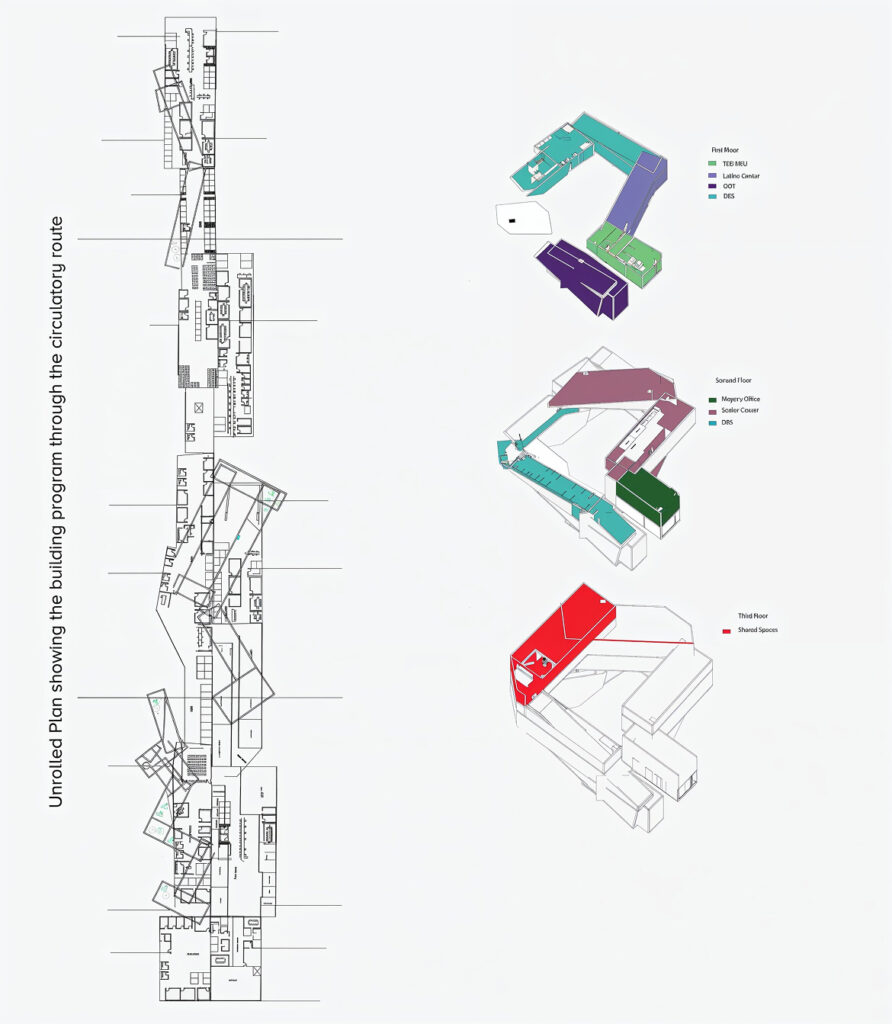
PROGRAM DIAGRAM
THE MODEL